

Window Privacy: Why Being Invisible During the Day Doesn't Mean You're Invisible at Night
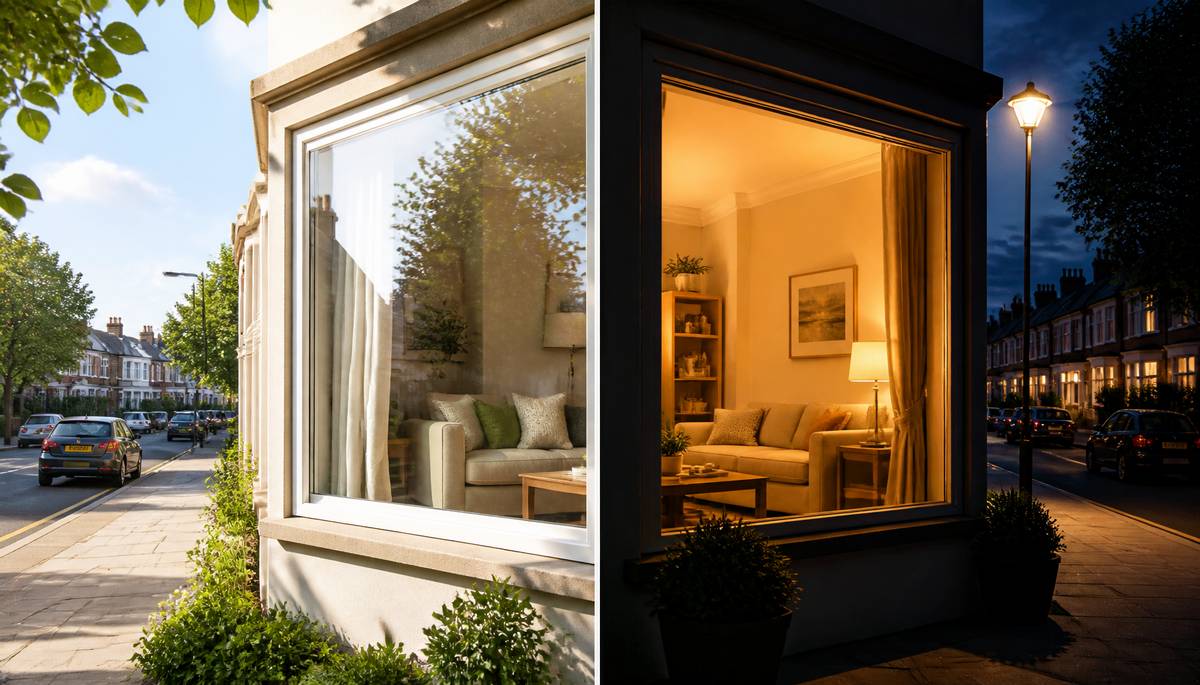 Your living room window might be keeping a secret, and unfortunately, the secret is you. During daylight hours, you can sit comfortably beside the glass, watching pedestrians, passing cars and the occasional neighbour attempting to reverse into a parking space. You feel pleasantly anonymous. Then evening arrives, the lights go on, and your previously discreet living room becomes a brightly illuminated exhibition for anyone walking past.
This peculiar reversal happens because window privacy depends less on the glass itself than on the balance of light inside and outside a property. Understanding this relationship can help homeowners enjoy natural daylight without accidentally providing the neighbourhood with a nightly documentary about their domestic habits.
Why Windows Behave Differently After Sunset
Glass both transmits and reflects light. During a bright afternoon, the exterior surface of a window reflects enough daylight to make it difficult for people outside to see into a relatively dark room. Meanwhile, someone indoors can usually see the street quite clearly because the outside environment is much brighter.After sunset, the situation reverses. Interior lighting makes the room brighter than the surrounding street, allowing people outside to see through the glass much more easily. Occupants looking outward may see little beyond reflections of their own furniture, lamps and increasingly questionable decorating decisions.
This effect is particularly noticeable in ground-floor flats, terraced houses and properties overlooking public footpaths. Large windows and modern open-plan interiors can make the problem more pronounced, especially when ceiling lights illuminate an entire room.
The Reflective Glass Illusion
Reflective window films and specialist glazing can improve daytime privacy by increasing the amount of light reflected from the glass. However, many products depend on the exterior being brighter than the interior.Once indoor lighting becomes dominant, their privacy benefits can diminish considerably. Some reflective films effectively reverse their behaviour, making it easier to see inside while occupants experience stronger internal reflections.
This distinction matters when choosing glazing treatments. Products advertised as providing daytime privacy should not automatically be assumed to offer equivalent protection after dark. Certain specialist films and opaque glazing solutions behave differently, but their performance and effect on natural light require careful consideration.
Why Sheer Curtains Sometimes Betray Their Owners
Sheer curtains are popular because they soften incoming daylight while maintaining an attractive connection with the outdoors. During the day, they can obscure details sufficiently to discourage casual observation.At night, however, illuminated interiors can become surprisingly visible through lightweight fabrics. Silhouettes, movement and furniture arrangements may remain distinguishable, particularly when someone stands close to the window.
Fabric density, colour, weave and the distance between occupants and curtains all influence visibility. A useful experiment involves switching on the interior lights after dark and asking someone to observe the window from the pavement. The results can be educational, although explaining the exercise to a suspicious neighbour may require some diplomacy.
How Partially Open Shutters Change What People Can See
Window shutters offer an interesting compromise between privacy and daylight because their adjustable louvres allow occupants to control viewing angles. Rather than simply blocking or admitting light, the slats can redirect it while restricting direct lines of sight.However, the angle matters enormously. Louvres tilted upwards or downwards can produce quite different views depending on whether someone is standing outside, sitting indoors or looking from an elevated position. A setting that prevents pedestrians from seeing into a ground-floor living room might offer considerably less privacy from an upstairs window across the street.
At night, even narrow gaps between shutter slats can reveal movement or illuminated objects. Completely closing the louvres generally provides greater privacy, although small gaps around the panels may remain. Shutters are versatile, but they are not magical invisibility devices, despite what an optimistic estate agent might suggest.
Why Interior Lighting Deserves More Attention
One frequently overlooked solution involves changing how rooms are illuminated. Bright ceiling lights positioned near windows can make interiors exceptionally visible from outside, particularly when curtains or shutters remain open.Using lower-intensity lamps further inside the room can reduce this effect. Directional lighting, dimmers and carefully positioned lamps allow occupants to create comfortable evening conditions without unnecessarily illuminating every corner.
Moving seating areas away from exposed windows can also improve privacy. Someone sitting several metres behind a partially screened window may be considerably less visible than someone standing immediately beside the glass.
Finding Privacy Without Living in a Cave
The most effective approach often combines different window treatments rather than relying on one solution throughout the day.Sheer curtains can provide daytime screening while heavier curtains offer greater privacy after sunset. Adjustable shutters allow finer control over daylight and viewing angles, while suitable blinds can offer another practical option for rooms requiring occasional complete screening.
Frosted films work particularly well for bathrooms, entrance doors and windows overlooking neighbouring properties. Applying them only to the lower portion of a window can preserve sky views while preventing pedestrians from looking directly inside.
Privacy requirements also vary between rooms. A kitchen overlooking a quiet garden presents different challenges from a bedroom facing a busy pavement. Considering window height, neighbouring buildings and typical lighting conditions helps avoid unnecessarily restrictive solutions.
A Clear View of the Situation
Window privacy is not a permanent characteristic of glass but a changing relationship between light, distance, viewing angles and interior arrangements. What appears perfectly private at lunchtime may become surprisingly exposed by early evening.The simplest assessment involves examining each window from outside at different times of day, particularly after switching on the lights. This reveals weaknesses that are easily overlooked from indoors.
With thoughtful lighting, suitable window coverings and a little experimentation, homeowners can enjoy bright, welcoming rooms without sacrificing personal privacy. After all, there is nothing wrong with having an interesting domestic life. There is simply no obligation to provide the entire street with a front-row seat.
Article kindly provided by caledoniashutters.co.uk
Latest Articles
- What Scotland's Relentless Rain Can Reveal About Your Home's Plumbing
- Window Privacy: Why Being Invisible During the Day Doesn't Mean You're Invisible at Night
- Why Plumbing Problems Behave Differently in Older Tenement Buildings
- Is Your Bed Frame Making Your Mattress Work Harder?
- Before You Hire a Handyman, Photograph the Problem Properly
- The Repair That Reveals Three More Repairs: How to Handle Scope Creep Calmly
- The 'While You're Here' List: Small Jobs That Are Worth Grouping Together
- The Previous Owner's Strange Decisions and How a Handyman Unpicks Them
- The Guest Test for Small Home Repairs
- How Long Should a Dishwasher Last, and When Is Repair the Better Choice?
- Why Is My Washing Machine Shaking So Much?
- The Weight Test: What Your Wall Can Really Hold
- Why a Door That Still Locks Can Still Be a Security Problem
- The One-Hour Home Audit: Small Defects That Quietly Become Expensive Repairs
- Can a House Be Too Well Insulated? Understanding the Other Half of Low-Energy Design
- Your Roof Needs to Breathe Too: The Link Between Ventilation, Condensation and Hidden Timber Damage
- Why Your Boiler Behaves Perfectly Until the Weather Turns Cold
- Why Roof Age Is Only Part of the Picture
- How HOA Boards Can Catch Pavement Problems Before They Get Expensive
- Why Vacuuming Alone Eventually Stops Making a Carpet Look Clean
- Interior Design
- Home Improvement
- Gardening
- Home Organization
- Home Maintenance
- DIY Crafts
- Kitchen and Dining
- Bathroom Design
- Home Security
- Home Automation
- Green Living
- Home Office
- Home Decor
- Garden Design
- Pet Care
- Home Technology
- Landscaping
- Home Energy Efficiency
- Home Cleaning
- Home Safety
- Home Exterior
- Home Insulation
- Home Buying
- Home Selling
- Renting
- Tradespeople
- Garage
- Bedroom
- Painting and Decorating
- Plumbing and Drainage